You didn’t choose your favourite character by accident.
In fantasy stories, we’re not just observers. We’re participants, quietly aligning ourselves with characters who think, react, and survive in ways that feel strangely familiar. Whether you’re drawn to a calculating strategist, a morally gray survivor, or a chaotic thinker, your preference reveals something deeper about your fantasy character personality.
This isn’t about labels.
It’s about reflection.
Let’s explore what your favorite character says about you, and why fantasy has such an uncanny ability to mirror who we really are.
Why We Relate to Fictional Characters in Fantasy
One of the biggest misconceptions about fantasy is that it’s pure escapism. In reality, it’s the opposite.
Fantasy strips away everyday noise, jobs, social rules, expectations, and leaves behind raw choices: power, fear, loyalty, ambition, survival. That’s why personality traits in fantasy stories feel so intense and personal.
Psychologically, we relate to fictional characters because:
- They externalize our internal conflicts
- They act out decisions we suppress
- They give shape to emotions we can’t easily name
This is why character personality analysis in fantasy is so powerful. When you feel attached to a character, you’re not admiring them, you’re recognizing a version of yourself.
The Strategist: Calm, Observant, Always Three Steps Ahead
If your favorite Ironstardust character is the quiet thinker, the one who watches more than they speak, you likely value control over chaos.
What This Says About You
- You process before you act
- You prefer precision over impulse
- You’re uncomfortable with unpredictability
You’re the type who plans conversations in advance, who notices patterns others miss, and who rarely reveals your full hand.
Common Fantasy Personality Types
- MBTI fantasy characters: INTJ, INFJ
- Motivated by foresight, structure, and meaning
Inner Truth
You don’t fear confrontation, you fear inefficiency.
The Chaotic Thinker: Clever, Unpredictable, Dangerously Curious
Do you gravitate toward characters who laugh in the face of danger, bend rules, and improvise their way out of disaster?
Then you thrive in uncertainty.
What This Says About You
- You think fast and adapt faster
- You resist rigid systems
- You mask depth with humor or chaos
You’re energized by movement and tension. When things fall apart, you come alive.
Common Fantasy Personality Types
- MBTI fantasy characters: ENTP, ESTP
- Motivated by novelty, challenge, and freedom
Inner Truth
Chaos isn’t recklessness for you, it’s a thinking environment.
The Morally Gray Survivor: Practical, Loyal, Unromantic About Good and Evil
If you’re drawn to characters who make uncomfortable choices, and live with them, you understand survival better than ideals.
What This Says About You
- You value results over recognition.
- You carry responsibility quietly.
- You’re loyal, but not naïve.
You don’t ask, “Is this right?”
You ask, “Will this work?”
Common Fantasy Personality Types
- MBTI fantasy characters: ISTP, ISFP
- Motivated by realism, self-preservation, and selective loyalty
Inner Truth
You don’t seek darkness, you endure it
Heroes, Villains, and the Ones in Between
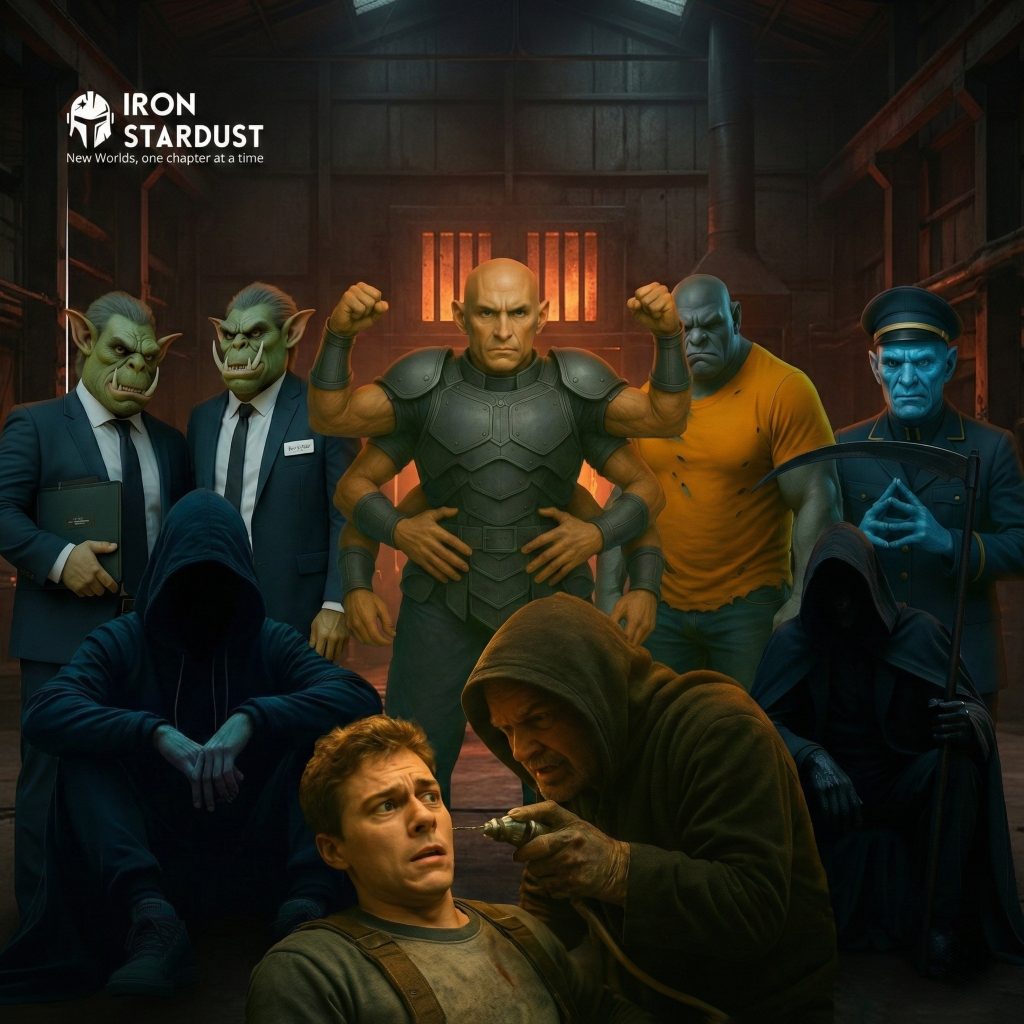
Traditional fantasy draws clean lines between good and evil. Ironstardust doesn’t.
That’s why readers connect so strongly to its characters. They aren’t archetypes, they’re reactions to pressure. And your preference reveals how you respond under strain.
This is where fantasy personality types become mirrors:
- Heroes reflect who we want to be seen as.
- Villains reflect impulses we suppress.
- Survivors reflect who we become when tested.
The characters you remember aren’t the loudest.
They’re the ones that feel uncomfortably familiar.
The Twist: You Didn’t Choose the Character — They Found You
Here’s the truth most readers don’t expect:
Your favorite character isn’t aspirational.
They’re diagnostic.
Fantasy permits us to recognize parts of ourselves without judgment. That’s why what your favourite character says about you often feels more accurate than personality tests.
You don’t relate because they’re impressive.
You relate because they’re honest.
What This Means for You as a Reader
Understanding why we relate to fictional characters isn’t about categorizing yourself; it’s about awareness.
- Why does this character’s choices feel justified to you?
- What decisions of theirs would you make differently?
- Which flaws do you excuse, and why?
Fantasy doesn’t tell you who you are.
It shows you who you might be when the world strips everything else away.
You didn’t just read Ironstardust.
You recognized yourself inside it.
And that’s the kind of fantasy that never lets go.