When we think of epic tales, we usually imagine the shining hero. But let’s be honest: it’s often the villain who steals the show. Without them, the hero has no challenge, no growth, and no reason to embark on the journey. In many ways, villains are the secret backbone of every story—mysterious, flawed, and unforgettable.
Do We Secretly Love Villains More Than Heroes?
Heroes are predictable—they win, they save, they inspire. Villains? They’re complicated. They make us question morality, cheer for chaos, and sometimes even root against the so-called “good guys.”
Think of characters like Darth Vader or Loki. They bring the drama, the mystery, and the charisma that keep us hooked. Whether it’s through witty one-liners, sharp intelligence, or raw power, villains often become the most iconic figures in storytelling.
The Fine Line Between Antagonist and Protagonist
Not all villains are cackling monsters. Some are just protagonists in the wrong story. An antagonist simply stands in the hero’s way—but from their perspective, they are the hero.
This gray zone is what makes modern storytelling so addictive. Is Killmonger in Black Panther a villain, or just someone fighting for justice in the wrong way? The line between right and wrong often depends on whose side you’re on.
Redemption Arcs: When Villains Become Heroes
Nothing captures readers’ attention like a good redemption arc. Watching a villain evolve into an ally—or even the true hero—hits deep. It’s about hope, change, and the belief that no one is beyond saving.
From Zuko in Avatar: The Last Airbender to Jaime Lannister in Game of Thrones, redemption arcs remind us that villains are human too (well… unless they’re space demons or interdimensional warlords).
The Villains That Haunt the Iron Stardust Galaxy
In the Iron Stardust universe, villains aren’t cardboard cutouts of evil. They’re layered, ambitious, and often terrifyingly relatable. Some crave domination. Others hunger for forbidden knowledge. A few simply want revenge.
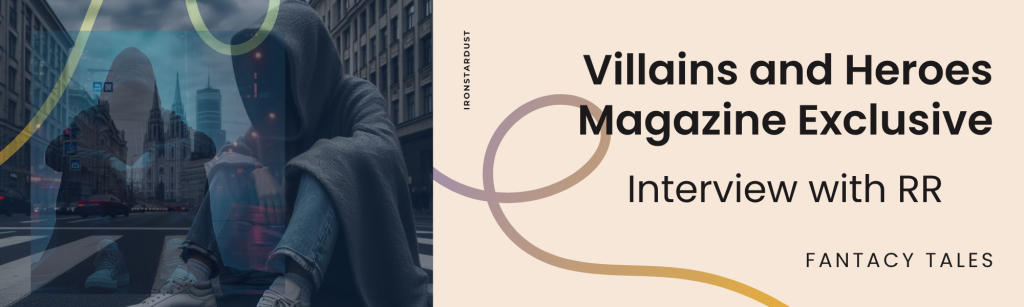
Take RR, one of the galaxy’s most infamous figures. Her sharp wit and ruthless choices make her unforgettable. She doesn’t see herself as a destroyer but as a necessary force—a cosmic balancer in a universe teetering on chaos. What makes RR stand out, like many Iron Stardust villains, is the humanity beneath the darkness: ambition, grief, envy, or even a desperate hunger for freedom. It’s this complexity that forces readers to ask—what really makes someone a villain?
How Iron Stardust Redefines Villains: Case Study
Instead of simply serving as obstacles for the heroes, Iron Stardust villains act as mirrors of the human condition. They reveal what happens when ambition goes unchecked, when justice turns to vengeance, or when survival demands sacrifice. These characters are designed to make readers uncomfortable in the best way—because they reflect pieces of ourselves we don’t always want to admit.
This approach sets Iron Stardust apart from classic good-vs-evil tales. Here, villains don’t just drive the plot forward—they challenge the very fabric of morality in the galaxy. Sometimes, you’ll find yourself agreeing with them. Sometimes, you’ll fear you might become them.
Take Captain Fghjkl, a brilliant strategist whose obsession with control pushes entire worlds into submission under the guise of “order.” Or the Ogres, brutal survivors of forgotten wars who embody raw hunger and the primal will to dominate. Then there’s Agent Kreap, the shadowy manipulator who thrives on secrets, turning allies against each other with a smile that hides endless betrayal.
These villains don’t just exist to be defeated—they exist to make us think. And that’s what makes Iron Stardust’s storytelling unforgettable.
Conclusion: Villains Are the Heartbeat of Storytelling
Without villains, stories fall flat. They test heroes, ignite conflict, and often leave the biggest mark on our imaginations. Whether tragic, terrifying, or strangely relatable, villains are the real stars—the ones we can’t stop thinking about.
And in the Iron Stardust galaxy, villains aren’t just background players. They’re the pulse of the universe. To truly understand the cosmos, you must walk in the shadow of its darkest legends.