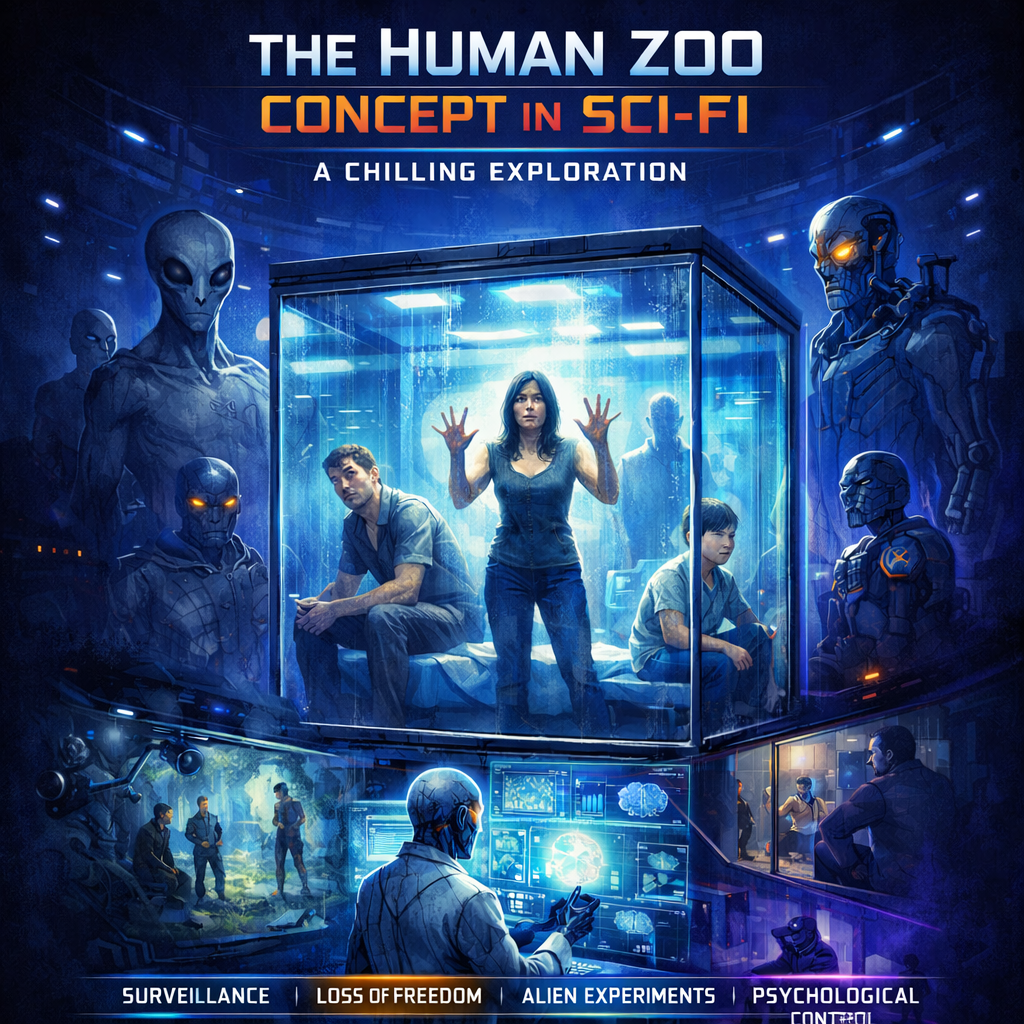
Imagine waking up in a room that feels almost normal, soft white lights, temperature-controlled air, silent walls. But then your eyes adjust, and you realize the truth: the walls aren’t walls at all. They’re glass. And on the other side, someone, or something, is watching.
This is the unnerving heart of the Human Zoo concept in science fiction. It’s a theme that exposes our deepest fears: losing control, becoming a specimen, and being studied like an exotic animal. But sci-fi doesn’t use Human Zoos just to shock us; it uses them to reveal something unsettling about ourselves.
1. What Is a Human Zoo?
A Human Zoo in science fiction is a place where humans are captured, displayed, or studied by a more powerful species—usually aliens, advanced machines, or future societies.
But at its core, it’s about one terrifying idea:
What if humans became the creatures inside the exhibit?
In these stories, the “zoo” becomes a metaphor for:
- surveillance
- exploitation
- loss of autonomy
- and the fragility of human dignity
The Human Zoo flips humanity’s role from observer to observed—and forces us to confront truths we often ignore.
2. Real History vs. Sci-Fi Interpretation
Sci-fi didn’t invent the Human Zoo concept—it sharpened it.
In real history, “human exhibitions” tragically existed, where people were displayed based on race, culture, or physical difference. Sci-fi takes this dark past and reimagines it on a cosmic scale, transforming it into:
- alien experiments
- behavior studies
- dystopian containment
- and moral questions about who really deserves freedom
Where history shows cruelty, sci-fi expands the idea into a cautionary tale:
What if the roles were reversed?
3. Famous Human Zoo Stories
Human Zoo themes appear across the genre: underground labs, alien terrariums, futuristic domes, even simulated reality systems that trap humans inside perfect but controlled environments.
But the most powerful examples are the ones that feel uncomfortably familiar—the ones where the captors behave the way humans once did. These stories press a simple, painful question:
If a superior species saw us the way we once saw others… would we survive their judgment?
4. The Iron Stardust Take on the Human Zoo
One of the most striking modern interpretations comes from the Iron Stardust universe in the story “Human Zoo”
Here, the concept is not just physical—it’s psychological.
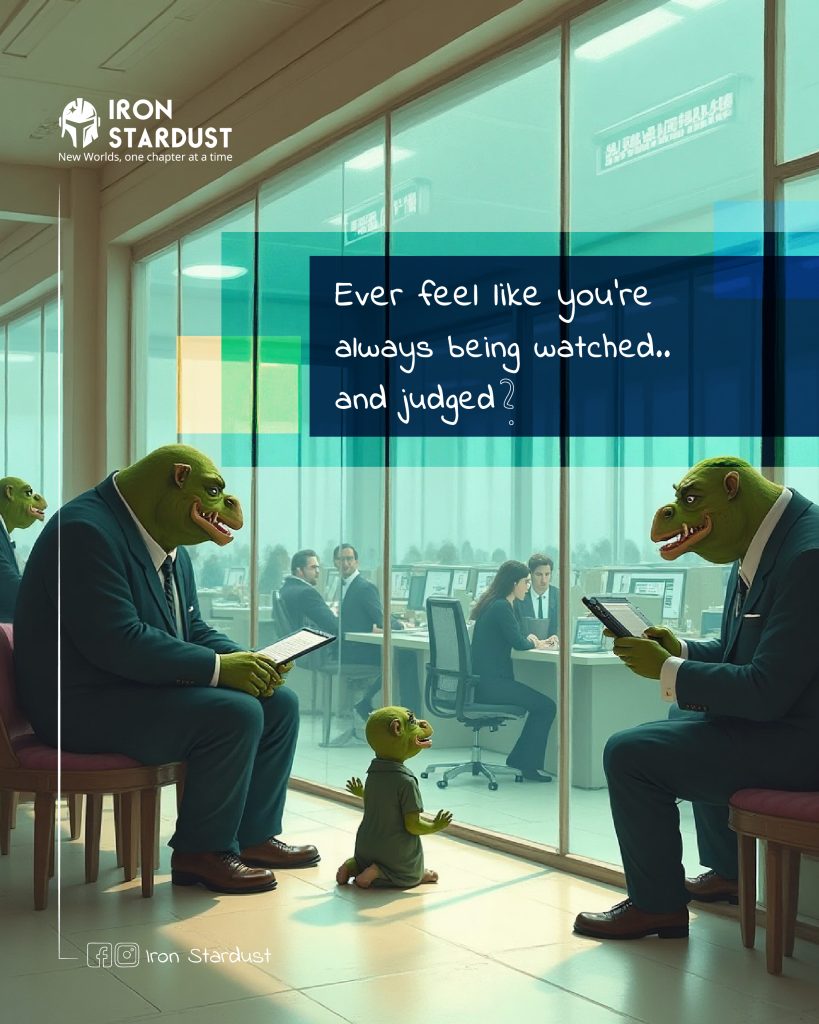
In Iron Stardust, humans aren’t simply trapped; they’re studied for their emotional reactions, moral choices, and survival instincts. The captors believe they’re performing a “scientific necessity,” not cruelty—making the situation even more disturbing.
The protagonist experiences:
- artificial landscapes
- manipulated environments
- and controlled social interactions
as observers track their every move, searching for patterns in human fear, hope, and resistance.
Iron Stardust’s version stands out because it goes beyond captivity—it explores identity.
What happens to a person when they are watched so closely that they begin to forget who they are?
How Iron Stardust Redefines the Human Zoo Theme
Unlike classic sci-fi tales, Iron Stardust doesn’t treat the Human Zoo as a cage. Instead, it turns it into a mirror.
The story reflects:
- our obsession with observation
- the ethics of control
- and the psychological erosion caused by constant surveillance
This is what makes Iron Stardust’s interpretation unique:
The zoo isn’t built to imprison bodies—it’s built to dissect the human spirit.